Αναζητήστε σελίδες, άρθρα και βιβλία (ράφια AnyFlip και δανειστική βιβλιοθήκη) σε όλο το galilea.gr.
LIVEΕδώ παρακολουθείτε ζωντανά το 24ωρο πρόγραμμα του Galilea WebTV, καθώς και τις ζωντανές μεταδόσεις της Galilea.gr — που περιλαμβάνουν και τις μεταδόσεις της Φιλαρμονικής.
ΑΓΙΟΙ

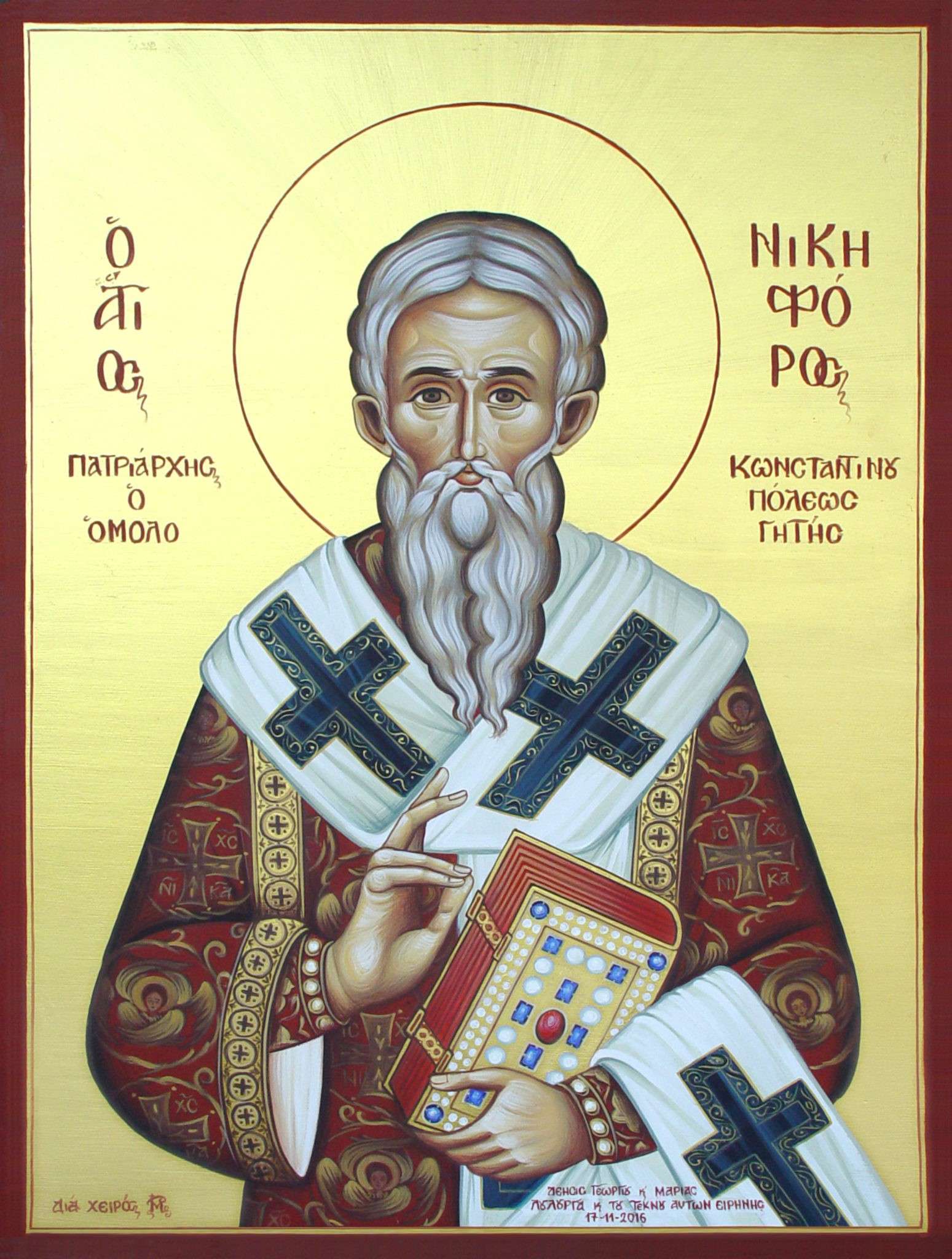
SAINT NIKEPHOROS

APOLYTIKION. Tone 3. Of Divine Faith

Your inspired confession brought victory to the Church, O God-inspired hierarch Nikephoros. For, venerating the icon of the Word, you unjustly endured exile. Venerable Father, entreat Christ our God to grant us great mercy.
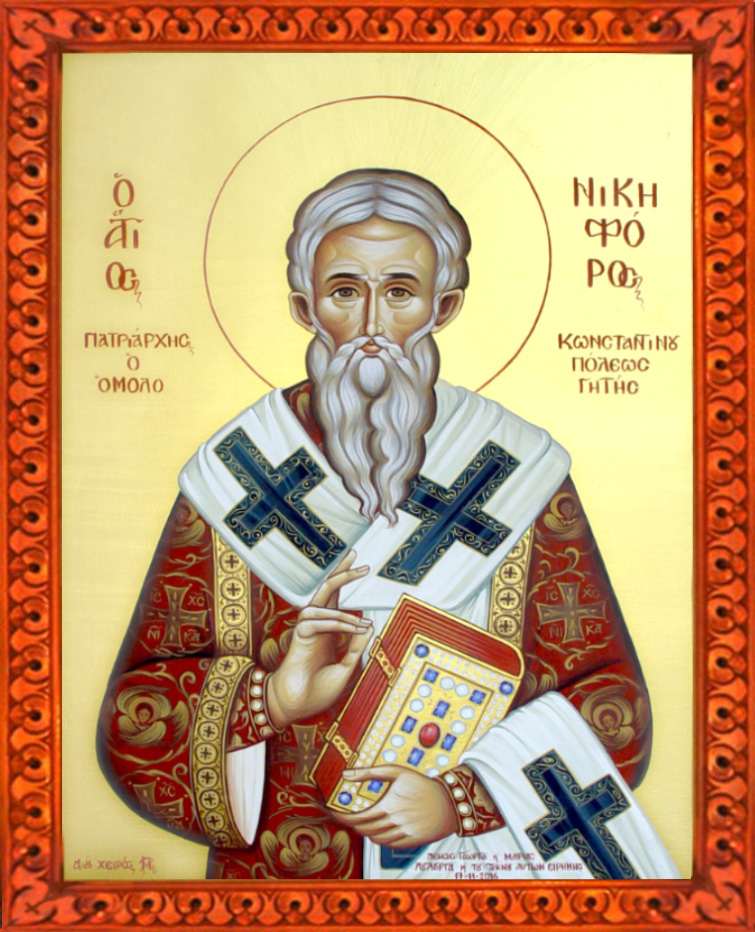
SAINT NIKEPHOROS, PATRIARCH OF CONSTANTINOPLE

THE LIFE OF THE SAINT:
Prologue:
The God-bearing Saint Nikephoros, the Confessor, was born in Constantinople in 758 AD, from distinguished and pious parents, the ΑΓΙΟΣ ΝΙΚΗΦΟΡΟΣroyal secretary and notary Theodore and Eirene. His father was exiled by Emperor Constantine V the Copronymus (741 – 775 AD) to Mylasa in Caria, because he was a champion of the holy icons. Later, he was exiled to Nicaea, where he reposed after 6 years.
Monastic Life:
Nikephoros received a good education and served as a royal secretary, but, having a disposition towards the monastic way of life, he was tonsured a monk and withdrew to a certain hill opposite the Thracian Bosphorus, where, together with other monks, he ascended the ladder of virtues through constant ascetic struggle and prayer.
Patriarch of Constantinople:
Having become known for his virtues in Constantinople, he was invited and undertook the direction of a certain hospital in the city. When the Saint Tarasios reposed († 25 February), under Emperor Nikephoros I the Logothete (803 – 811 AD), by the vote of the clergy and the people, he was elected on 5 April 806 AD as Patriarch of Constantinople and was consecrated on the 12th of the same month on the day of Holy Pascha.
As long as Emperor Nikephoros and his successors Staurakios (811 AD) and Michael I the Rhangabe (811 – 813 AD) lived, the Patriarchate of Saint ΑΓΙΟΣ ΝΙΚΗΦΟΡΟΣNikephoros was peaceful and undisturbed. When, however, Leo V the Armenian (813 – 820 AD) became emperor, who was an iconoclast, Saint Nikephoros was a resolute and fearless rebuker of the imperial impiety. The Patriarch Saint Nikephoros took with him the Venerable Theophylaktos of Nicomedia, Saint Emilianos of Cyzicus, Saint Euthymios of Sardis, Eudoxios of Amorion, Saint Michael of Synada and Saint Joseph of Thessalonica and went to the palace, to rebuke the emperor and to help him return to the right faith. The emperor remained unrepentant and condemned them all to exile.
Exile – Repose:
Patriarch Nikephoros was initially exiled to Chrysopolis and subsequently to the monastery of the Holy Great Martyr Theodore near Akritas (Arezoun). There he became more closely connected with Saint Theodore the Studite, who was also in exile.
When, after a short time, Emperor Leo having been assassinated, Michael II the Stammerer (820–829 AD) became emperor, Saint Nikephoros returned to Constantinople and sought his restoration. Emperor Michael accepted this proposal, but on the condition that the Saint acknowledge the existing ecclesiastical order and not raise the issue of the restoration of the holy icons. The Saint rejected this condition and preferred exile, where he reposed in 829 AD at the age of about seventy years.
Restoration of the Holy Icons – Translation of the Holy Relics:
After the cessation of Iconoclasm and the restoration of the holy icons, Patriarch Methodios I (842–846 AD) (who established that ΑΓΙΟΣ ΝΙΚΗΦΟΡΟΣthe triumph of Orthodoxy, the restoration of the holy Icons, should be celebrated festally on the First Sunday of the Fast, the Sunday of Orthodoxy) proposed to Emperors Michael and Theodora (842–867 AD), “who ruled the most pious Roman Empire”, that it was not right for the holy relic of Saint Nikephoros to remain outside the City: “It is not right that Nikephoros, the venerable and most holy among Patriarchs, who was cast out for the blameless Faith of the Hierarchy and the Throne, and who ended his life in distant exile, should not have his precious and holy Relic brought within Constantinople.” Then the Emperors approved the translation of the holy relics of Saint Nikephoros. For this purpose, Patriarch the Great Methodios was sent “with Priests and Monks and a multitude of the People” and the Emperors’ officials, who opened the Saint’s tomb at the monastery of Saint Theodore and found his holy body intact and unharmed nineteen years after his repose. With sacred hymns and magnificence, priests and monks placed it in a royal trireme and brought it to the Queen of Cities. When the royal ship approached the strait of the Acropolis, the Emperor and the Senate went out with candles to meet the holy relic, which they “kissed and, carrying on their shoulders, laid in the Great Church”, the Holy Sophia, where many Vigils and Divine Liturgies were celebrated. Finally, from there, in the year 846 AD (13 March), it was deposited in the Church of the Holy Apostles, where, until then, (2 June), his Synaxis was celebrated. There, on the Monday of Pascha, the Emperor also worshipped, who, before the tomb of Saint Nikephoros, lit candles and prayed.
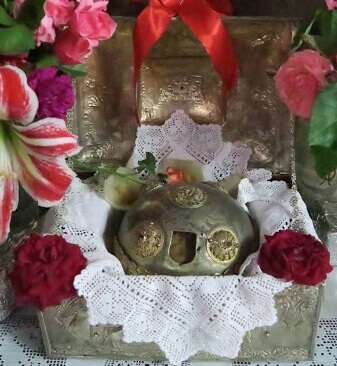
The Holy Head:
Today the Holy Head of our Father among the Saints Nikephoros, Patriarch of Constantinople the Confessor, is kept in the women’s, old and historic Holy Monastery of Saint George of Malesina, of the Holy Metropolis of Phthiotida.

ΑΓΙΟΣ ΝΙΚΗΦΟΡΟΣSaint Nikephoros the Confessor is a major figure in the history of the Church, not only because he fought the iconoclasts with enthusiasm and holy zeal, but also because of his exceptional ability as a writer. His best-known works include “Short History”, “Brief Chronology”, “Stichometry”, “Refutations”, “Letters”, and various ecclesiastical canons (see the Holy Rudder, or Pedalion).
Saint Nikephoros’ great contribution to the vindication and establishment of Orthodox teaching lies in his systematic refutation and rejection of iconoclast positions, especially those concerning Christological doctrine.
In rejecting the veneration of holy icons, the iconoclasts had from the outset also cast out icons of the angels. Drawing on the Old Testament, Saint Nikephoros demonstrated that the angelic powers, although bodiless, immaterial and (relatively) unconfined, can be depicted. Their icons are called by the names of their prototypes, through which the grace and blessing of those depicted are imparted to them; those who honour the icons worthily also partake of that grace and blessing. Thus, according to this holy Father, icons of the angels are not lifeless, unfeeling products of human hands made from lifeless and irrational matter; they are not idols. Rather, they are “honourable and holy likenesses”, “sacred representations and images” of the heavenly Powers, whose making “God commands; God enjoins”. (Archim. N. K.).

Apolytikion. Tone 3. To the melody “Divine faith”.
Your inspired confession brought victory to the Church, O Nikephoros, divinely guided hierarch; for, venerating the icon of the Word, you unjustly endured exile. Venerable Father, beseech Christ our God to grant us His great mercy.
Kontakion. Tone 3. To the melody “Today the Virgin”.
You laid down your life for your flock, Father, and instilled in it the purity of true devotion. Therefore it joyfully welcomes the divine reliquary of your relics and cries: You are my boast and protection, O Nikephoros, shining lamp of confession.
ΑΓΙΟΣ ΝΙΚΗΦΟΡΟΣ

(You may download or publish part or all of the material on this website, provided that www.galilea.gr is acknowledged as the source. www.galilea.gr)

ΑΓΙΟΣ ΝΙΚΗΦΟΡΟΣ