Open the MAP HERE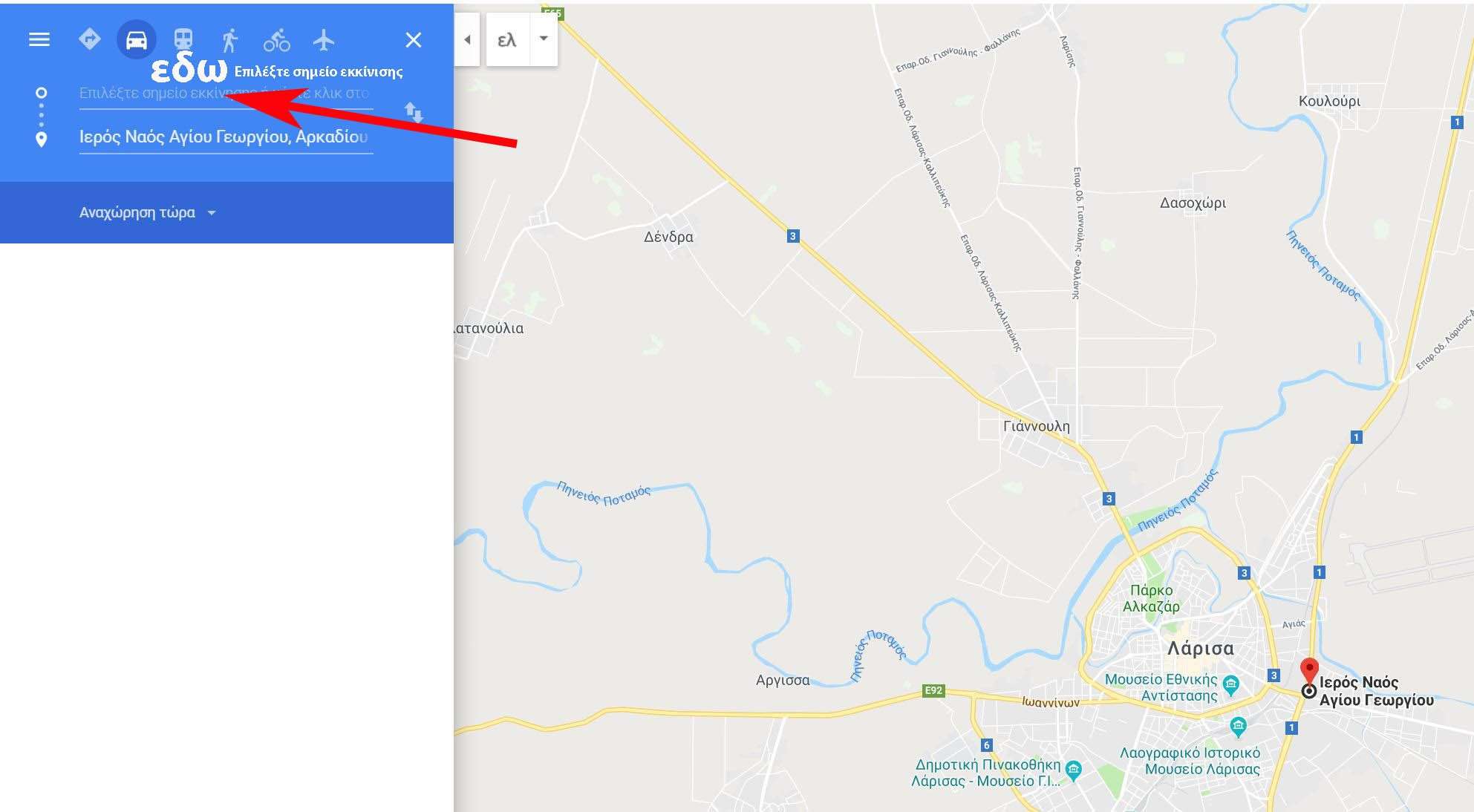 and enter your starting point in the box at the upper left “Choose starting point, and the route you choose will appear immediately.
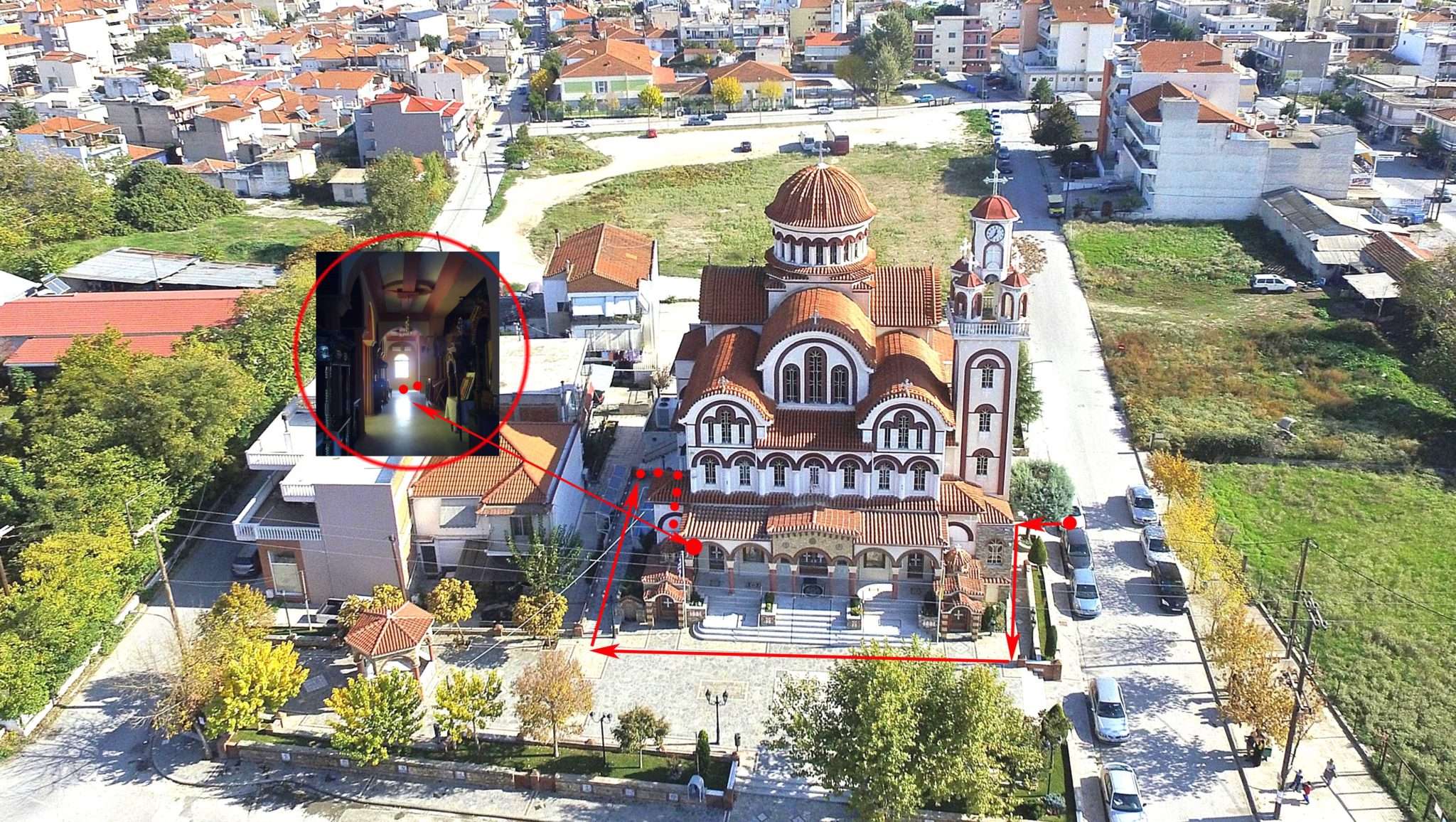
OUR CHURCH PROVIDES CONVENIENT ACCESS FOR PEOPLE WITH DISABILITIES.
(Select the image or HERE to enlarge).
We joyfully await you. You are most welcome.
Contact numbers:
Church: 2410280569
Parish priests:
Fr Vasileios, 6937418683
Fr Nikiforos, 6945353959
SEE THE RELATED VIDEO (progress of building works, PHASE 1), No. 4, IN ARCHIVE — VIDEOS — INFORMATION TOURSHERE:
THE HISTORY OF OUR CHURCH
THE PROGRESS OF BUILDING WORKS
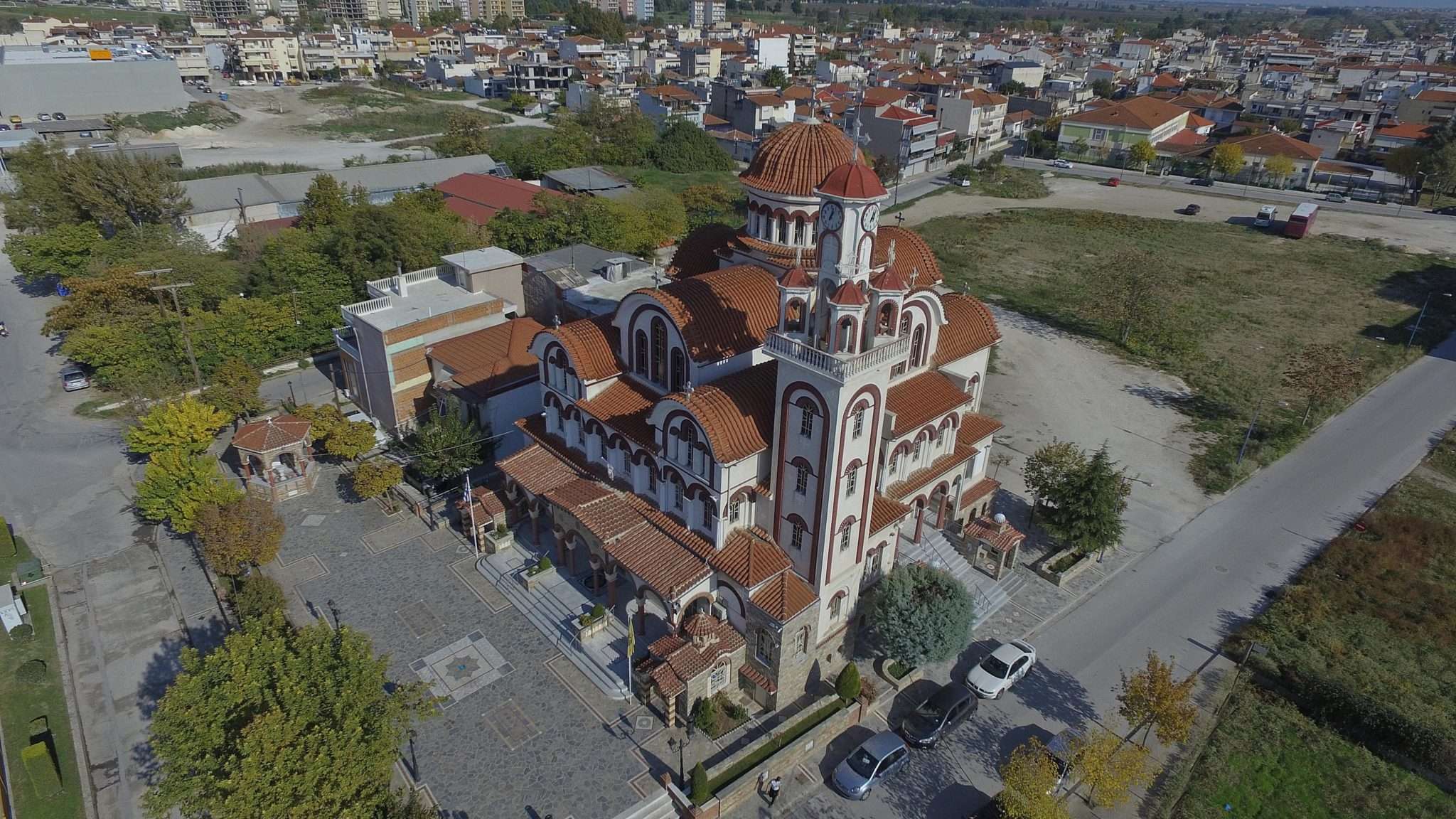
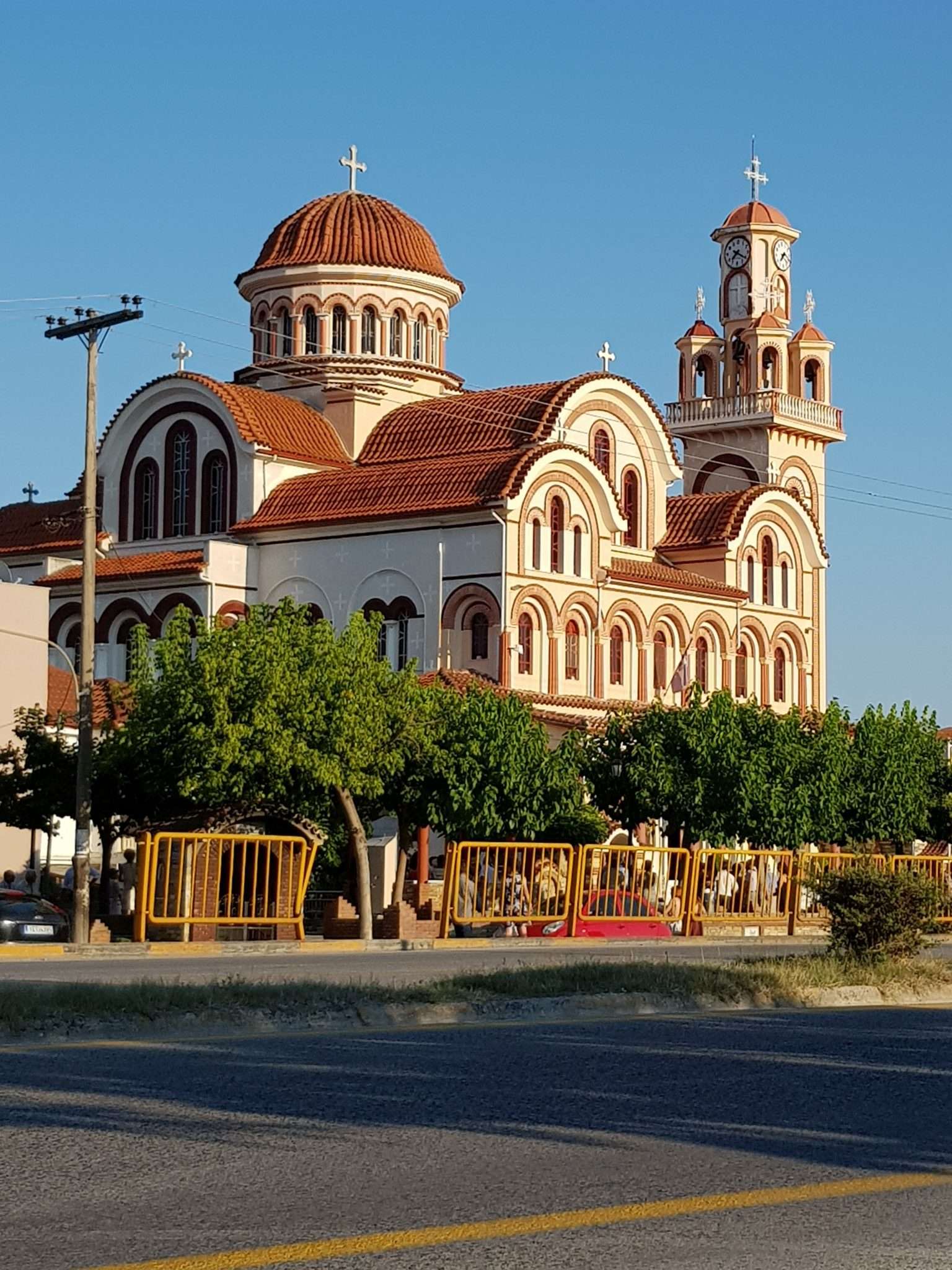 Our church is dedicated to the Great Martyr Saint George the Trophy-bearer and stands at the junction of Volou Street and Karamanli Avenue, formerly the old Athens–Thessaloniki national road. The chronological development of our church's construction and renovation works is as follows:
1964. The first official efforts to build the church began during the tenure of Metropolitan Iakovos Schizas of Larissa and Platamonas.
11 June 1964. Following application 4/552 from the Metropolitan Council of the Holy Metropolis of Larissa and Platamon, the competent Prefectural Council approved and constituted the first Fundraising Committee (Ref. No. 26909/11-6-1964), with the purpose of “conducting a fundraising appeal for the construction of our holy church.”
1967–1974. During the ministry of Metropolitan Theologos Paschalidis of Larissa and Platamon, intensive efforts were made to find a suitable, conveniently usable plot in an appropriate location for the parish.
29 June 1981. During the tenure of Seraphim Orfanos, Metropolitan of Larissa and Platamon, the Church of Saints Constantine and Helen purchased the plot (Land Sale Contract 6.740/29-6-81). Thus, with many sacrifices, construction of the Church of Saint George the Great Martyr began within the Parish of Saints Constantine and Helen, under the care of its priests.
20 May 1984. A few years later, with God's help and the intercessions of the Great Martyr Saint George, the tireless efforts of successive fundraising committees, but above all people's donations and sacrifices, resulted in His Eminence Seraphim laying the foundation stone of our church on 20 May 1984.
11 April 1993. With God's help, our church held its first service on Palm Sunday, 11 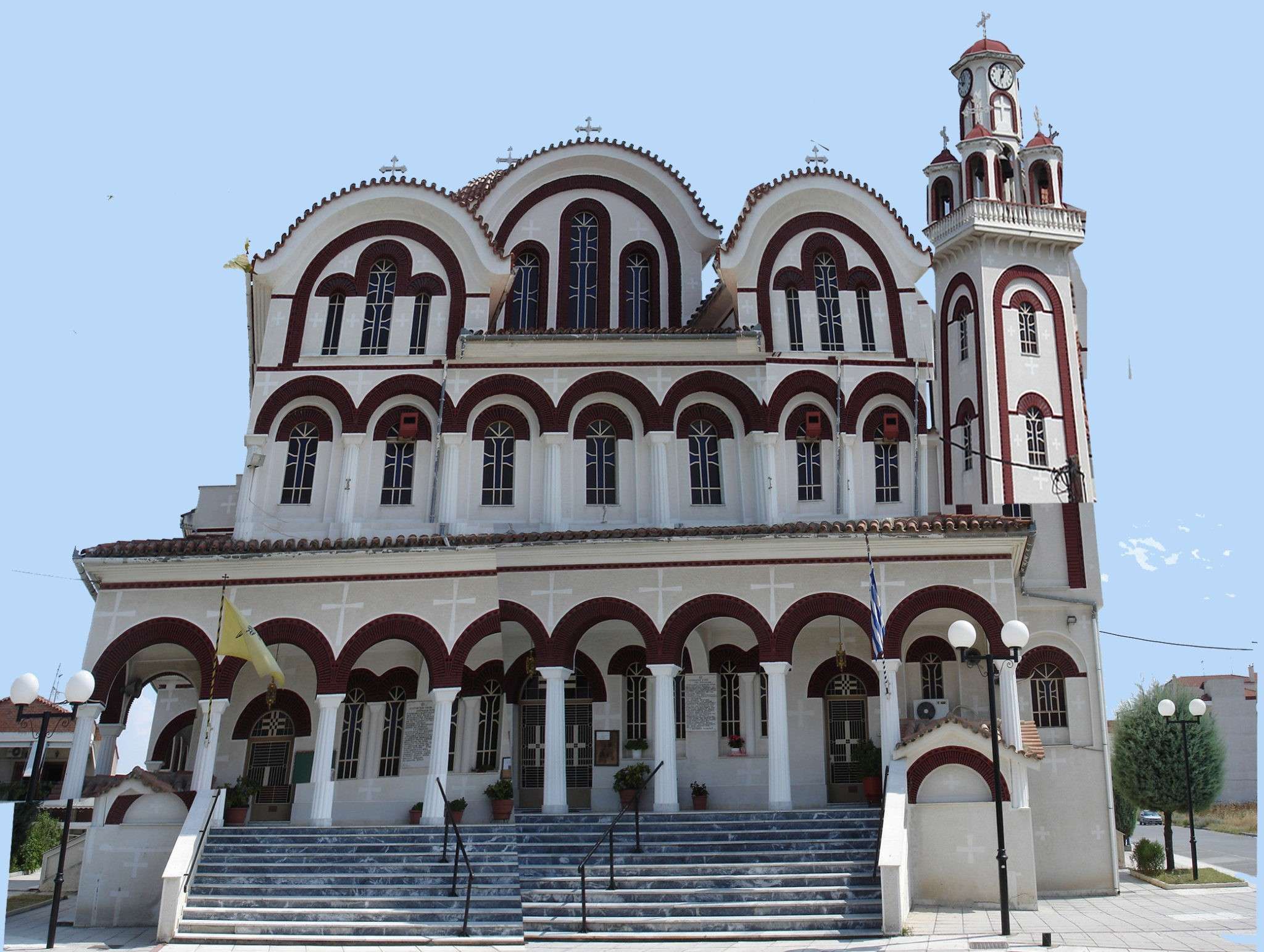 April 1993.
3 November 1997. The church is consecrated by Metropolitan Ignatios Lappas of Larissa and Tyrnavos, on the very feast of the Translation of the Holy Relics of Saint George the Great Martyr and Trophy-bearer.
8 March 1999. After many efforts, our parish is established by Presidential Decree (P.D. 41, Government Gazette 44/8-3-1999, page 647).
21 April 2005. By Municipal Council decision No. 358/21-04-05, the old Larissa–Thessaloniki national road lost its former classification and was renamed Konstantinos Karamanlis Avenue. Thus our church gained the right, which it previously lacked, to extend westwards within its own property.
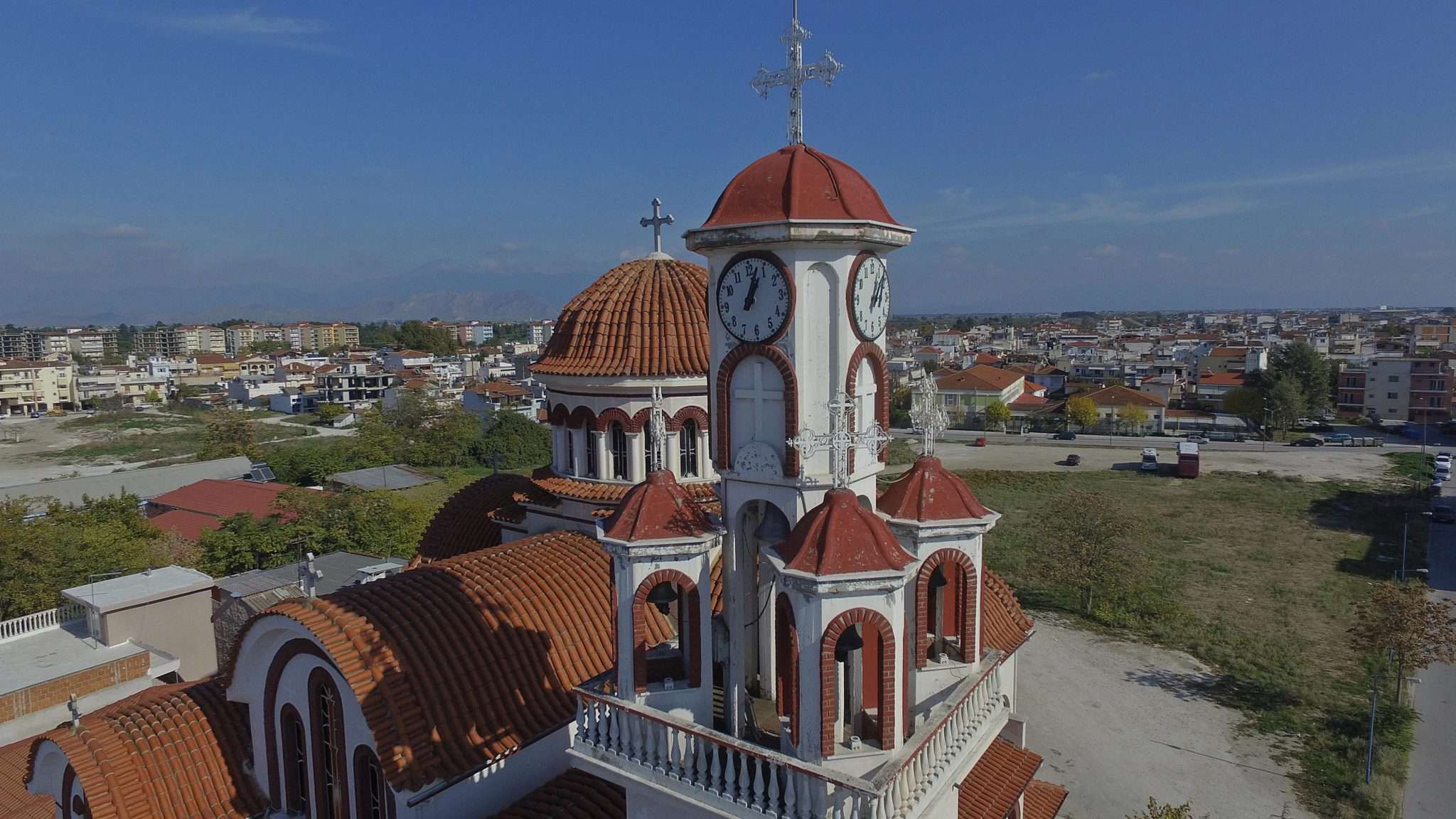
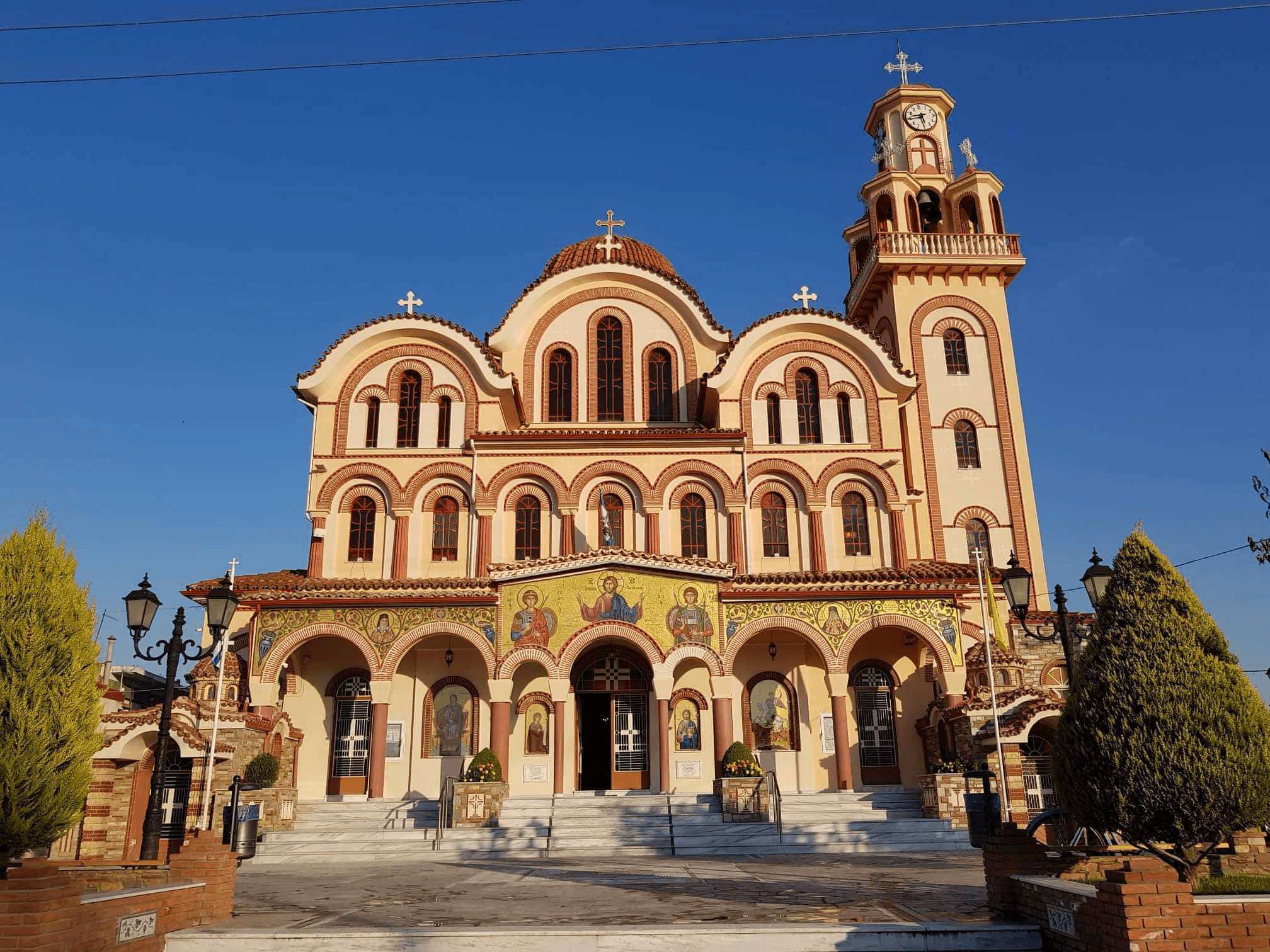 11 January 2007. With God's help and great care, planning begins for the renovation and extension of our church because of the shortage of usable space. The church will now be able to provide various auxiliary and functional areas, improve access down to Saint Phanourios' chapel, and replace its internal colonnade with an external Byzantine colonnade. This will also create the necessary narthex, completing the appearance of a domed Byzantine cruciform church, with a generously spacious passage allowing access for people with disabilities.
29 January 2010. By contract No. 11.262/29-1-10, ownership of the plot and the building on it was transferred by an inter vivos donation from the Church of Saints Constantine and Helen in Larissa to the Church of Saint George the Great Martyr in Larissa.
28 April 2010. After three years of planning, renovation work on the Holy Church begins.
20 September 2010. The final Divine Liturgy was celebrated in the church before its renovation.
26 September 2010. On Sunday 26 September 2010, the first Divine Liturgy is celebrated in our now-renovated Holy Church.
13 October 2018. The renovation of our Holy Church has now been completed in terms of its building, appearance and acoustics, including the following improvements:
a. Extending the main church westwards by creating a narthex and an exterior Byzantine colonnade, a Parish Clinic and a Pharmacy.
b. Creating a convenient accessible passage into our church for people with disabilities, and, in the basement, an attractive meeting space, the “Ark” reception room, and a room for our parish catechetical schools.
c. Remodelling the women's gallery, with tiered seating and storage spaces beneath it.
d. Raising the chandeliers to improve worshippers' view from the women's gallery into the ground-floor church, and installing and operating a special system enabling those in the lower church to follow the Divine Liturgy.
e. Landscaping the church courtyard through paving, building low walls, planting trees and creating the “Life-giving Spring” holy-water fountain, providing holy water 24 hours a day during the first days of each month and on the feast of Theophany.
f. Reconstructing the church's southwest exterior side, creating two “Electronic Stalls”, one dedicated to Saint Luke the Physician and the other to Saint Philothei and Saint Dionysios the Merciful. Through them, visitors can find out about the church's activities, enjoy recreational material, study and also access our website, www.galilea.gr.
 g. In the basement, where the Church of the Holy Great Martyr Phanourios is located, rooms were fitted out for the clothing bank, community meals, parish grocery, electronics workshop and other storage areas.
h. The painting of the church's icons was completed, as was the construction of a mosaic of remarkable artistry on the façade of the central portico.
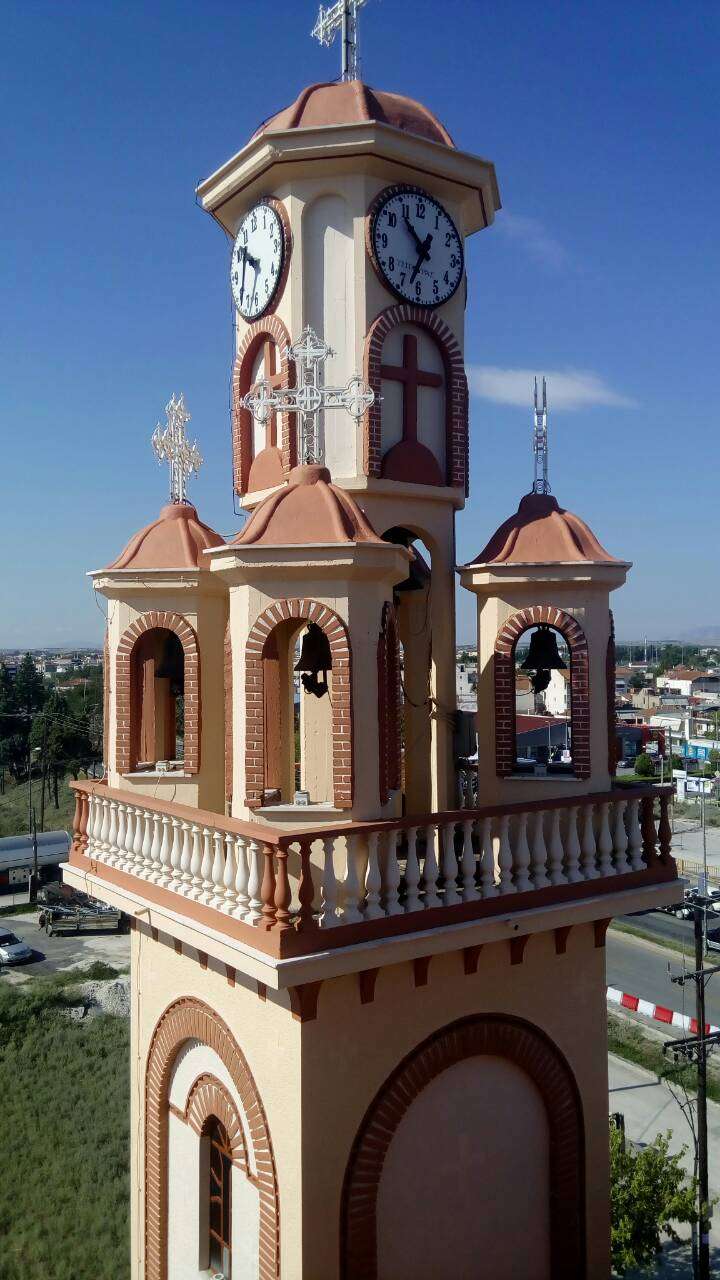
i. An aesthetic renovation and maintenance of the church was also carried out, with exterior stone cladding, special paintwork for our church, and LED lighting inside and out, giving passers-by a distinctive impression by day and night.
j. Finally, work was completed to improve the sound quality, heating and other facilities, so that worshippers can participate in the holy services more comfortably.
26 May 2019. Under our care, the section of our church courtyard's frontage beside K. Karamanli Avenue was completed, following approval by the authorities and with the contractor's assistance.
2 June 2019. A giant screen was installed outside the church:
a. So that people unable to enter the church because of the large congregation can follow the sacred services.
b. For pastoral purposes, by showing various religious, educational and recreational videos.