
The Saints of Thessaly, by Charalambos Stergioulis
28 Ιανουαρίου 2019 · ΑΝΑΚΟΙΝΩΣΕΙΣ
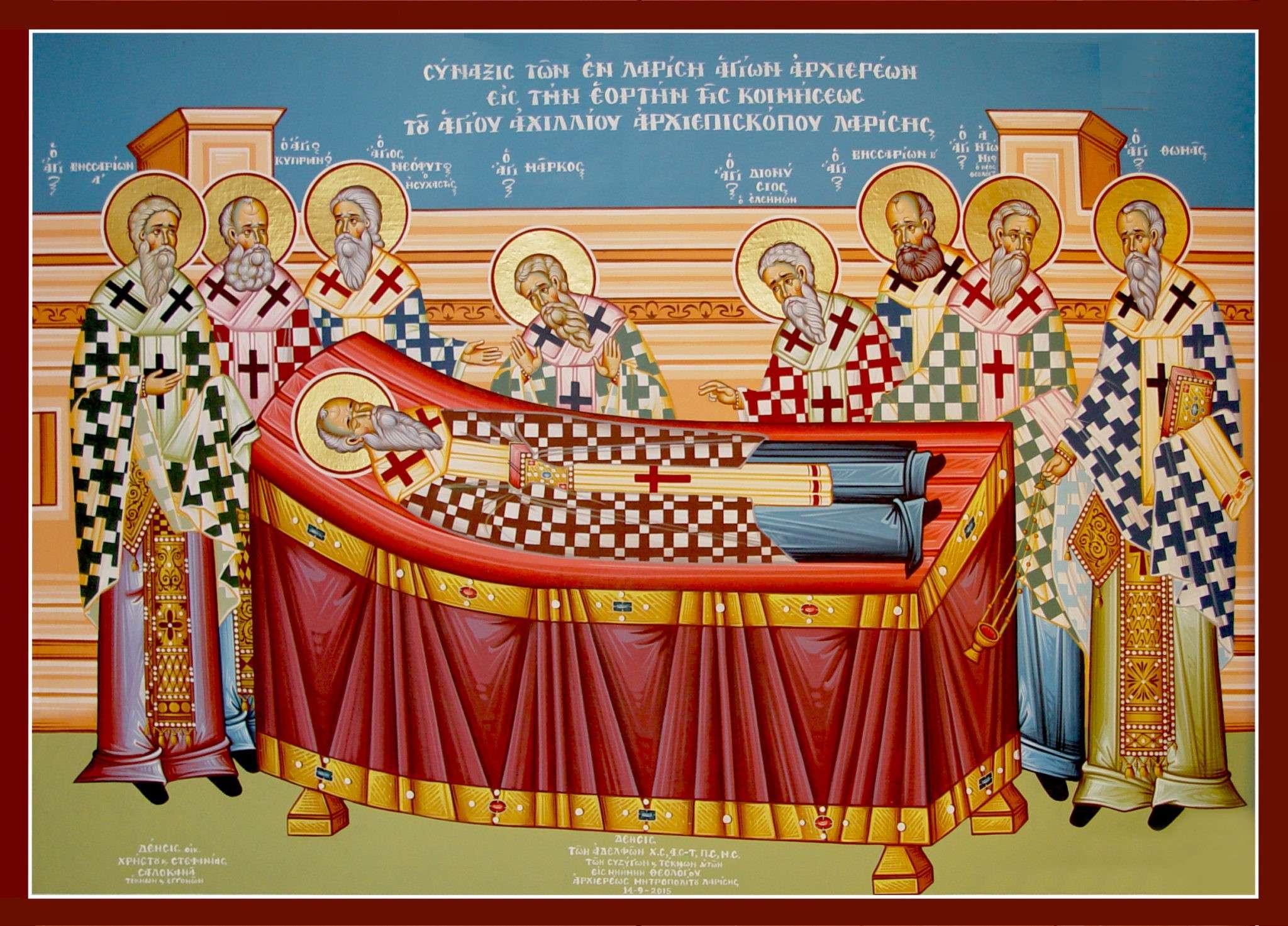
An excellent scholarly work concerning our local Saints has been published in “Synthesis”, the online journal of the Theology Department at Aristotle University of Thessaloniki. This study by Mr Charalambos V. Stergioulis, PhD in Byzantine Philology from Aristotle University, was submitted to the Department of Philology of the University's Faculty of Philosophy as a dissertation for the postgraduate specialisation degree in Medieval Greek Philology, supervised by Professor Vasileios Katsaros, now Emeritus Professor of Medieval Greek Philology. It was first published in “Thessaliko Imerologio” 38 (2000), 305–334, and 39 (2001), 335–364. Its republication with new additions and improvements was considered appropriate. It is well worth reading.
Charalambos V. Stergioulis,
PhD in Byzantine Philology, Aristotle University of Thessaloniki
The Saints of Thessaly
Hagiographical and Liturgical Manuscripts and Texts. During the Byzantine and post-Byzantine eras, Thessaly gave rise to many Saints. In the Early Byzantine period (324–565) lived Saints Achillios, Archbishop of Larissa (†350), Reginos, Bishop of Skopelos (mid-4th century), and Oikoumenios, Bishop of Trikke (4th century). In the Middle Byzantine period (565–1081), the military Saints Nikolaos en Bounain and Harmodios, together with a group of their fellow soldiers, lived and were martyred (10th century). The presence of Saints in the Late Byzantine period (1081–1453) is particularly notable, owing to the foundation and development of the monastic community of Meteora. In these times we encounter the Meteora Saints: Ieremias (12th century), Athanasios (c. 1302–1380), Ioasaph (1349/1350–1422/1423), Varlaam (14th century) and Antonios (mid-15th century); the Metropolitans of Larissa: Kyprianos (mid-13th century), Thomas (late 13th century) and Antonios the New (14th century); while in the Pelion region, during the same period, lived the Venerable Laurence (14th century). Sources for the life and activity of the Thessalian Saints are the hagiographical and hymnographic texts that refer to them. The reception of these texts, especially the hagiographical ones, during the Byzantine and post-Byzantine eras was considerable. Proof of this reception is, according to Sofianos, “the fact that, despite all the destructions and vicissitudes of the libraries over so many centuries with their various storms, these texts have been preserved in hundreds of manuscripts.” The manuscript tradition for the Thessalian Saints is not extensive. The original lives are preserved in only a single manuscript, while the number of manuscripts preserving adaptations of the lives is small. This is due to the fact that these particular Saints are local and their veneration did not spread widely. Many researchers have been engaged in the recording, description and publication of the manuscripts relating to the Thessalian Saints. In particular, N. Veis and the continuator of his work, D. Sofianos. They brought to light remarkable material not only concerning the life and activity of the Saints of the Thessalian region, but also regarding the history of Thessaly in the Byzantine and post-Byzantine eras. The aim of the present study is the collection of the manuscripts referring to the Byzantine-period Thessalian Saints, their description, and the presentation of the relevant bibliography.
BYZANTINE PERIOD
I. ACHILLIOS, ARCHBISHOP OF LARISSA († 350)
A. Brief Life
He attained this office during the reign of the Great Constantine (288?–377), before the convening of the First Ecumenical Council at Nicaea (325)………….(Read the continuation here)