Historical Trials of Macedonia.
25 Ιανουαρίου 2019 · ΑΝΑΚΟΙΝΩΣΕΙΣ
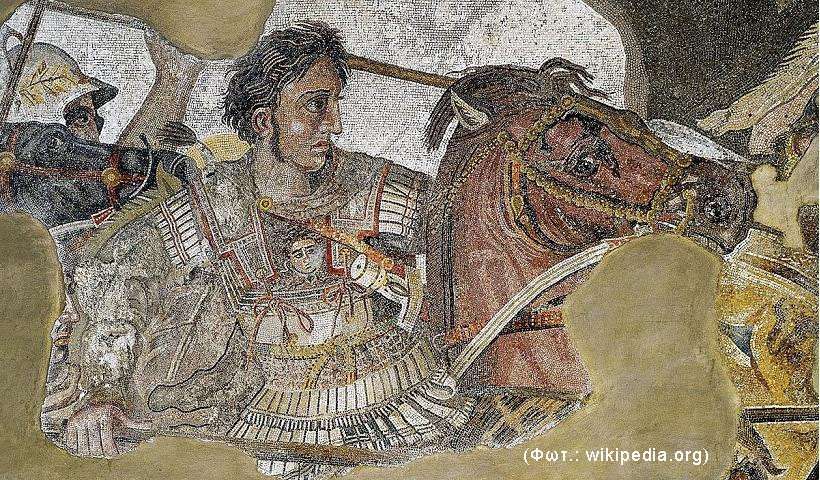
HERODOTUS, BOOK CALLIOPE. ANCIENT TEXT [9.45.1] When they heard this, they immediately followed him to the guard posts. When they arrived, Alexander said to them: “Men of Athens, I entrust these words to your keeping as a sacred deposit, charging you to reveal them to no one other than Pausanias, lest you bring about my ruin; for I would not have spoken had I not been deeply concerned for the welfare of all Greece. [9.45.2] For I myself am of ancient Greek stock by birth, and I would not wish to see Greece enslaved and deprived of her freedom.” TRANSLATION [9.45.1] And when they heard these things, they immediately followed him to the guard posts. And when they arrived, Alexander said to them the following: “Men of Athens, I entrust these words to your safekeeping, asking that they remain secret; speak them only to Pausanias and to no one else, so that you do not bring about my downfall; for I would not have spoken had I not been deeply concerned for the whole of Greece. [9.45.2] For I myself am by descent always a Greek, and I would not wish to see Greece lose her freedom and become enslaved.”
Source: http://www.greek-language.gr/digitalResources/ancient_greek/library/browse.html?text_id=30&page=222
S. Kargakos “They seek the dismemberment of Greece. We are not worthy of freedom.” The tears and revelations of the patriotic historian. Listen HERE
THE ANCIENT WORLD: HISTORY—ARCHAEOLOGY—ART—SCIENCE—PHILOSOPHY
SOURCE: https://theancientwebgreece.wordpress.com
THE LANGUAGE OF THE ANCIENT MACEDONIANS
25 November 2017
By Christos Barbagiannidis
Even in antiquity, the language of the Macedonian tribe provoked disputes and disagreements. Difficult for other Greeks to understand, their language seemed out of place amid the multitude of dialects of the Greek tribes. Was it a dialect of Greek or an entirely separate language? And once Macedonia had conquered half the known world, why was Attic Greek, rather than, say, Macedonian, promoted and established as the world language? In an earlier article we tried to support the Aeolian origin of the Macedonians and reject the established, conventional view of a Doric origin. Nevertheless, their language was not a clearly Aeolian dialect either. What, then, was it?
Many Macedonians, such as the Orestae and the Tymphaei, living very close to the Epirotes, used a form of the so-called Western Greek language. With the unification of Macedonia under Philip II and the settlement of colonists, the Macedonian language spread throughout the country. When Macedonia was crushed by Rome, it is doubtful whether the Macedonian language continued to exist, or whether anyone remained to record it. Hesychius preserved the greatest number of Macedonian words for us, most probably taking them from the works of Macedonian authors such as Marsyas of Macedon—provided, of course, that they have not been altered in transcription.
The names of noble houses within the region we call ancient Macedonia were certainly Greek. The same holds for the royal houses of all the small local Macedonian kingdoms—the Orestians, Pelagonians, Elimiotes, Lyncestians and Tymphaeans—but this does not prove that the Macedonians themselves spoke Greek. Characteristic names of Macedonia's royal houses are also found in Epirus, for example Derdas, Pausanias, Machatas, Antiochos, Simmias and Aeropos. Over the years these names were absorbed into the Macedonian state and had an almost common origin. The only light they shed on the Macedonians' language comes from dialect forms, such as Iollas instead of Iolaos. The number of place names we can confidently attribute to the Macedonians is also very small.
Obverse of a silver coin of Dyrrhachium bearing the name of the magistrate Kallikrates, 200–30 BC. Pella Archaeological Museum.
Let us now consider the peoples other than the Macedonians who had lived or were living within the boundaries of the ancient Macedonian kingdom, and the languages they spoke. Illyrian was spoken by the Penestae, who lived at the westernmost source of the Axios. In the early Iron Age, Illyrian-speaking conquerors occupied part of the coastal plain near Vergina. The Paeonians spoke a distinct language of unknown origin. Herodotus regarded the Paeonians as an offshoot of the Teucrians of Troy, who had settled there before the Trojan War.
Other invaders were the Mysians, who became neighbours of the Macedonians, as Hellanicus of Mytilene maintained. The Agrianians and Laeaeans, along the middle course of the Strymon, though within Thracian territory, were Paeonians, as the unsurpassed and infallible Thucydides distinguishes them. Yet the Derriopes (in present-day Korçë), the Pelagonians (in Monastir, or Bitola), the Lyncestians, the Orestians, the Elimiotes and the Tymphaeans spoke Greek. Their dialect was related to that of Epirus, a form of Western Greek from which the Doric dialect also derives. This does not mean, however, that they were Epirotes rather than Macedonians. Strabo held that view, whereas Thucydides considered them all Macedonians except the Orestians, who nevertheless became “Macedonianised.” In any case, the entire mountainous region encompassing present-day Western Macedonia, Northern Epirus and part of southern Illyria was regarded by some writers as a single cultural region with a similar dialect, haircut and cloak, apart from the fact that some were bilingual. But again, these things tell us nothing. I am not American because I wear jeans, nor Japanese because I drive a Japanese car; and an old pupil of mine who had a Mohican haircut certainly does not belong to the Native American Mohican tribe! Finally, the Eordians—those who were not slaughtered were driven towards the Thracian regions near Mount Pangaion—spoke a pre-Greek language, most probably Phrygian.
Reverse of a tetradrachm of the Macedonian League, with a club, oak wreath and thunderbolt on the left.
158–150 BC. Archaeological Museum of Pella
If we turn south, the Magnetes, who migrated from southern Pieria to Thessaly because of Thracian raids, spoke Greek, specifically the Aeolic dialect. In earlier research we demonstrated the close kinship between the Magnetes and Macedonians. Thus Thracians inhabited Pieria and spoke Thracian, which was of course different from Greek. On western Olympus, the Perrhaebi of the Elassona area spoke Achaean Greek. We therefore see that around classical Macedonia, in northern Pieria and eastern Imathia, the Macedonians at various times neighboured peoples speaking not only Aeolic, Achaean and Doric Greek, but also the language of the Mysians, which was probably Phrygian, as well as Paeonian, Thracian and Illyrian!
East of the Axios, in what are now the prefecture of Thessaloniki and Chalkidiki, dialects of Phrygian and especially Thracian were spoken, while Chalkidiki’s two western “legs” were occupied by southern Greeks speaking various dialects. The Mount Athos peninsula had a small population of Chalcidians and bilingual barbarians, as Thucydides tells us. Among them were pre-Greek Tyrrhenians, related to Italy’s Etruscans, who spoke their own language as well as Thracian. In the Classical period, when the Macedonians began to grow stronger and drive out existing populations from Pieria, Almopia, Bottiaia and Eordaia, they brought their own language, whatever it was. In any event, Macedonian became the language of administration. There is no evidence that the Macedonians adopted Illyrian or Thracian. Perseus, the last Macedonian king, sent a bilingual Illyrian to negotiate with the Illyrian Gentius, evidently because there were no such Macedonians. Nor did anyone suggest that they spoke Thracian, although Demosthenes would have been delighted if they had! On the other hand, Greek spread from the colonies of the Chalkidiki peninsula and the southern Greek colonies of Pydna and Methone in Pieria. On the western side of the Pindus, most inscriptions discovered date from the fourth century BC and are all in Greek. They show that members of the Thesprotian and Molossian tribes spoke Greek, had Greek names and used Greek terms. Since a language is not adopted overnight, they evidently spoke the same language a few decades earlier, when Thucydides was writing. Yet Thucydides called them “barbarians”, just as he did the Macedonians who had campaigned with King Perdiccas and the Spartan Brasidas against Arrhabaeus of Lyncus. But the great Thucydides, the first true historian of Western civilisation, was referring to culture, not language! Members of these tribes did not participate in the world and ideas of the Greek city-state and were therefore “barbarians”. All tribal societies, all peoples—as Thucydides and Aristotle called them—were “barbarians” by definition! By the same reasoning, Demosthenes called Philip “the barbarian in Pella”, while Isocrates appealed to Philip as a Greek whose homeland was Argos. The question of language was entirely separate.
Cockerel, a child’s toy, placed as a grave offering in a child’s tomb. Fourth century BC. Pella Archaeological Museum.
What language, then, did the Macedonians speak? Let us examine some particularly significant points. When Alexander the Great trained 30,000 young Persians to join the Macedonian army, he arranged for them to learn Greek letters and be brought up according to Macedonian military customs. After returning from India, he organised each infantry unit in a ratio of four Macedonians to twelve Persians. A common language was a practical necessity. It follows that the Macedonian soldiers' language was Greek. Moreover, when Alexander feared an attempt against his life amid the disturbance in the Cleitus affair, he called to his guards “in Macedonian, since this was the signal for a serious disturbance” (Plutarch, Alexander 51.1: “calling the shield-bearers in Macedonian; this was the signal of a great uproar”). This command is the sole occasion on which Alexander used Macedonian. If the Macedonians of the 4th century BC spoke Greek as their own language, we must conclude that they also spoke it in the 5th century, when Thucydides described them as barbarians. The meaning of the word “in Macedonian” therefore becomes clear: Macedonian was not a non-Greek language, but a dialect of Greek! At a later stage, roughly a decade after Alexander's death, Macedonian soldiers gave Eumenes a special welcome, greeting him “in Macedonian speech”—that is, calling out in the Macedonian dialect (Plutarch, Eumenes 14.5). This was perhaps more a courtesy towards Eumenes, who would play a very important role in the wars of the Successors: he was a Greek from Cardia, a colony in the Thracian Chersonese, rather than a Macedonian by birth.
Let us also examine some mythological evidence. In his Ehoiai, Hesiod writes that Magnes and Makedon were sons of Zeus and Thyia, daughter of Deucalion, and therefore cousins of Hellen's sons, Dorus, Xuthus and Aeolus. This means that the Macedonians were regarded as Greeks rather than, for example, Thracians or Illyrians. Another genealogy, preserved in the records of the priestesses of Argos, names Makedon as a son of Aeolus. The choice of Aeolus rather than Xuthus or Dorus is striking. It means that they most probably spoke some form of Aeolic Greek. This is natural, since in an earlier study of the Macedonians' origins we effectively supported the position that their descent was Aeolic rather than Doric.
Hunting dog from a fourth-century BC tomb. Pella Archaeological Museum.
Only a small number of words can be associated with certainty with the Macedonians during their pre-Classical existence. Among these, the names of tribes and groups are Makednos, Maketai, Argeadai and Aeropes. The place names are Makednia, Maketa, Lebaia, Beres, Haliakmon, Pieria, Helikon, Olympos, Leibethra and Aigidion. The month names are Apellaios, Artemisios, Dios, Panamos, Daisios, Loios, Dystros, Xandikos, Peritios, Hyperberetaios, Audnaios and Gorpiaios. Religious names are Dia, Hetairidia, Thaulos, Olympia, Pseudanor, Arantides, Darron and Thourides. All the above words, without exception, are Greek and have no relationship to those known from Thracian or Illyrian.
The words mentioned above are not found in the Ionic–Attic dialect, meaning that they were not influenced by the southern Greek colonies of Chalcidice or introduced by merchants or settlers. Nor are there clear Doric characteristics. There are, however, characteristic elements of the Aeolic dialect: the use of omicron instead of alpha and the doubling of certain consonants. Generally, it is a strongly marked dialect: beta is used instead of phi, delta instead of theta, gamma instead of kappa, au instead of ao, and its words resemble Homeric forms more closely than classical ones. The Macedonian dialect belonged to the Aeolic group. It developed in isolation, and its affinities with Thessalian Aeolic and mixed Aeolic resulted from a common origin rather than shared development or continuous contact. During the 4th century BC, when dialects began declining and an established Greek language, later known as Koine, prevailed, Macedonia was no exception. The Macedonian dialect survived as a local idiom, and scholars recorded words that were uncommon, rare or very different from Greek in other dialects. We may examine some words of particular interest: the Silenoi and sautoria for soteria, ‘salvation’. Both words have au, which was used to express the sound aou and omega in the local pronunciation. The first two relate to the worship of Silenus, who was caught in Midas’s gardens on Mount Vermion and is of Phrygian origin.
The word “aliza”: the poplar tree, and the word “adiskon”: kykeon (a mixture of flour or barley meal used to make a drink for religious and magical purposes), as recorded by Hesychius, are of Phrygian origin. Likewise, the word for roses, “abagna”, meaning roses, is also of Phrygian origin.
The words Klodones or Klodones, later replaced by the word Mimallones, are connected with the worship of the Thracian god Dionysus and are names for women who worshipped the god. In Greece they were called Maenads, and in Thrace Bassarai or Bassarides. Another local name for
Aphrodite was Zeirene, as Hesychius records. All these names are of Thracian origin.
The word “bedy” is particularly characteristic. This Phrygian word, meaning water, formed the root of the names of two cities called Edessa. One was perhaps the earlier name of Aigai; the other was certainly present-day Edessa. It was used in Orphic worship. Clement of Alexandria also records the word with the meaning of air. Perhaps its use described two sources of life: water and air.
Marsyas the Macedonian preserved some words of Greek origin. One is korinaios, the son of an unmarried young woman, while Photios gave the same meaning to kyrnos. He also records three words meaning little girl—akraia, akrea and amale—and two for an older family member: appa and pelios, or peligan. He also mentions telesias, a Macedonian dance with knives or swords, while another war dance was called karpaia or karpea. Marsyas further mentions a special ceremonial drinking vessel, the gyala, and the name of a wooden cup, kypellon. Both words are clearly Greek in origin. In addition, Hesychios records axos: timber, meaning cut or chopped wood; daryllos: the oak; addai: rhymoi, dried wood; and finally ilax: the kermes oak or holm oak. These words too are of Greek origin.
Some further words are the following. “Abarkna”: “koma”, a dialectal form of “abrokoma”, meaning someone with long hair, a characteristic Macedonian hairstyle. The Suda records the spear names “sigyne” and “sigynnous”. These were names of Illyrian weapons if written with beta instead of gamma. Apparently the Macedonians adopted the weapon from their Illyrian neighbours. Another word is “argella”: “a Macedonian building which they heat and bathe in”. The Macedonians borrowed this from the Cimmerians, who arrived as raiders around 700–650 BC. In southern Russia, from where they came, they had such characteristic buildings: we might call them something like a sauna!
In general, it is estimated that 153 words of the Macedonian dialect have survived. We have already mentioned several. We can leave aside about thirty military terms, because they were coined from Greek to describe the new features of Philip's specialised army, and another six terms relating to places. There are six names of animals and birds derived from Greek: aigipops, argipous, dreges, kynoupeus, paraos and charon. Of the remaining forty words, some are dialectal forms of Greek words—danos, danon, dorax, daitas, zerethron, idnea and kebale—and some belong to standard Greek, while some are corrupted and others cannot be explained.
Thus, when we consider the movements of the Macedonian tribal group and their contacts with the Mysians, Phrygians, Thracians, Illyrians, Cimmerians and various Greek-speaking peoples, the surviving fragments of their dialect — that is, the words that survived, evidently because words with Turkish, Albanian, Slavic, Italian and other roots. There are therefore strong indications of a dialect that developed early and is more closely related to Homeric Greek than to the Greek of the fifth century BC.
In conclusion, the Macedonians' language was a distinct and particular form of Greek which resisted outside influences and was conservative in pronunciation. It remained so until the fourth century BC, when it was almost entirely overwhelmed by the spread of Common Greek.
Selected Bibliography
Herodotus, "Histories", Govostis Publications. Diodorus, "Library of History", Kaktos Publications. Hesiod, "Complete Works", Kaktos Publications.
Gr. Tsirigkas, "Upper Macedonia", Barbounakis Publications.
Otto Abel, "History of Macedonia", Karavia, D. N. – Anastatic Publications.
Suda, "Lexicon", Kaktos Publications.
Homer, "Iliad", Govostis Publications.
Strabo, "Geography", Papyros Publications.
Johan Gustav Droysen: Geschichte des Hellenismus, 1836–1843 (translated by Renos Apostolidis as "History of the Successors of Alexander the Great", Eleftherotypia Publications, 1993).
N. G. L. Hammond – G. T. Griffith, "History of Macedonia", Malliaris Publications.
Plutarch: "Demetrius", "Eumenes", "Pyrrhus", Kaktos Publications.
Thucydides, "History", Estia Bookshop.
The Photos are from here: https://www.pella-museum.gr/history/pella-stous-aiwnes