GREEK ORTHODOX CUSTOMS OF CHRISTMAS AND NEW YEAR
18 Δεκεμβρίου 2019 · ΑΝΑΚΟΙΝΩΣΕΙΣ
“THE CHRISTMAS TREE”
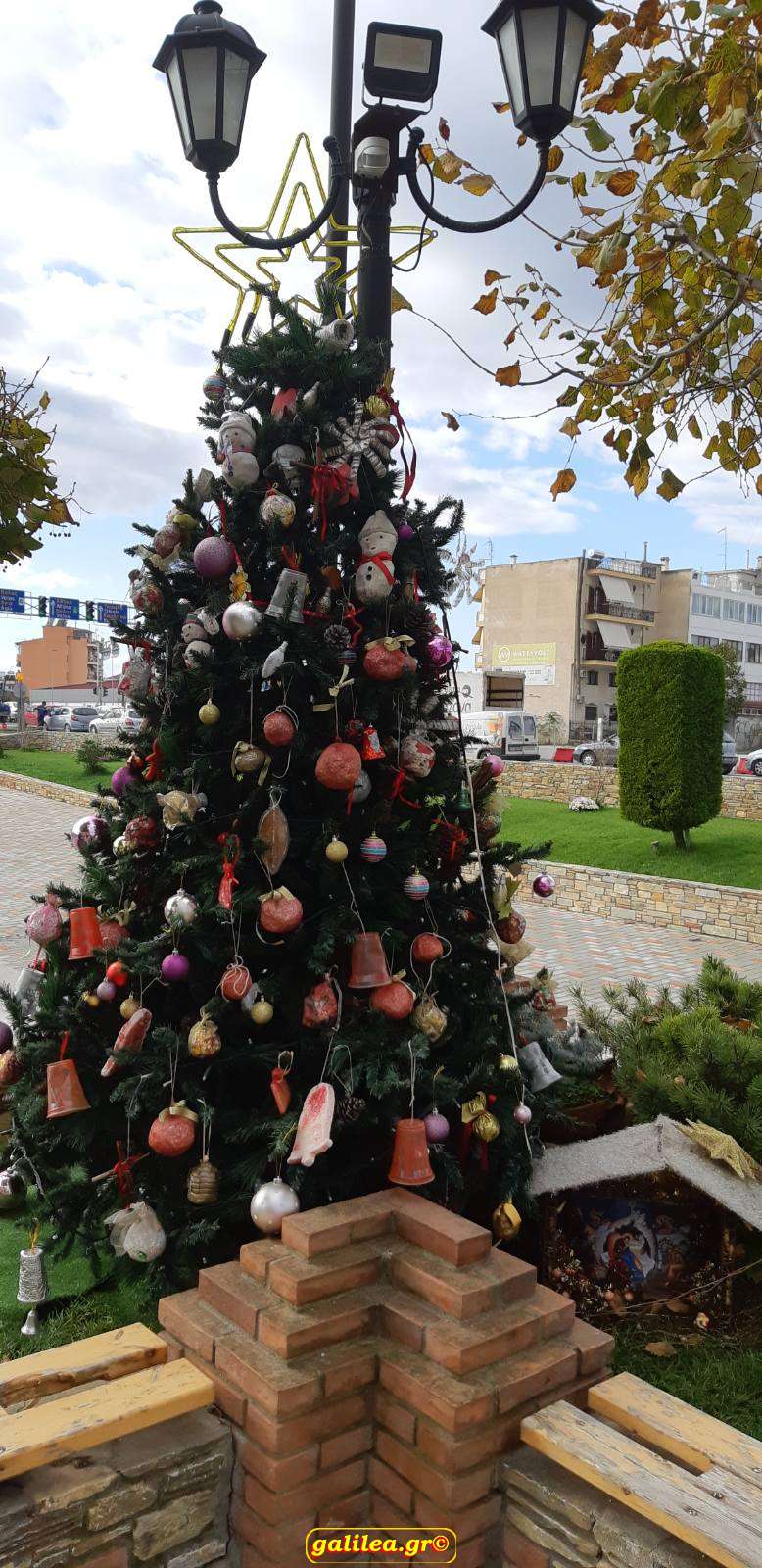
Each year, during the Christmas season, the Christmas tree adorns homes, streets, squares, shops, halls and courtyards, thus contributing to the festive atmosphere of these days. Yet what does it truly symbolise? There are many theories, but the correct answer is found in the Orthodox tradition of our Church. The Christmas tree is an ecclesiastical symbol; therefore, its decoration is an ancient and wholly Orthodox custom of Christmas! A forefeast Apolytikion says: “Prepare, O Bethlehem; Eden has been opened to all . Make ready, O Ephratha, for the Tree of Life has blossomed from the Virgin in the cave. For her womb has been revealed as a spiritual Paradise, in which is the divine planting; eating of it, we shall live, and shall not die as Adam did. Christ is born to raise up the image that had fallen.” That is to say, it emphasises that in Paradise there was a plant, from the fruit of which, having eaten, we died. Now, there is a new Paradise, the womb of the Theotokos, within which Paradise a new plant has sprung forth, from which, if we eat its fruit, we shall live and shall not die as the first-formed did. This plant is Jesus Christ! Why was the fir-tree used and not some other tree? Because:
a) Jesus Christ is the LIFE, and this is wonderfully symbolised by the fir-tree, which in the depths of winter remains verdant and
green!
b) With its shape, it invites us to an ascent from earthly things to heavenly things, to God!
c) It also shows that God descends, spreads forth and embraces the whole earth!
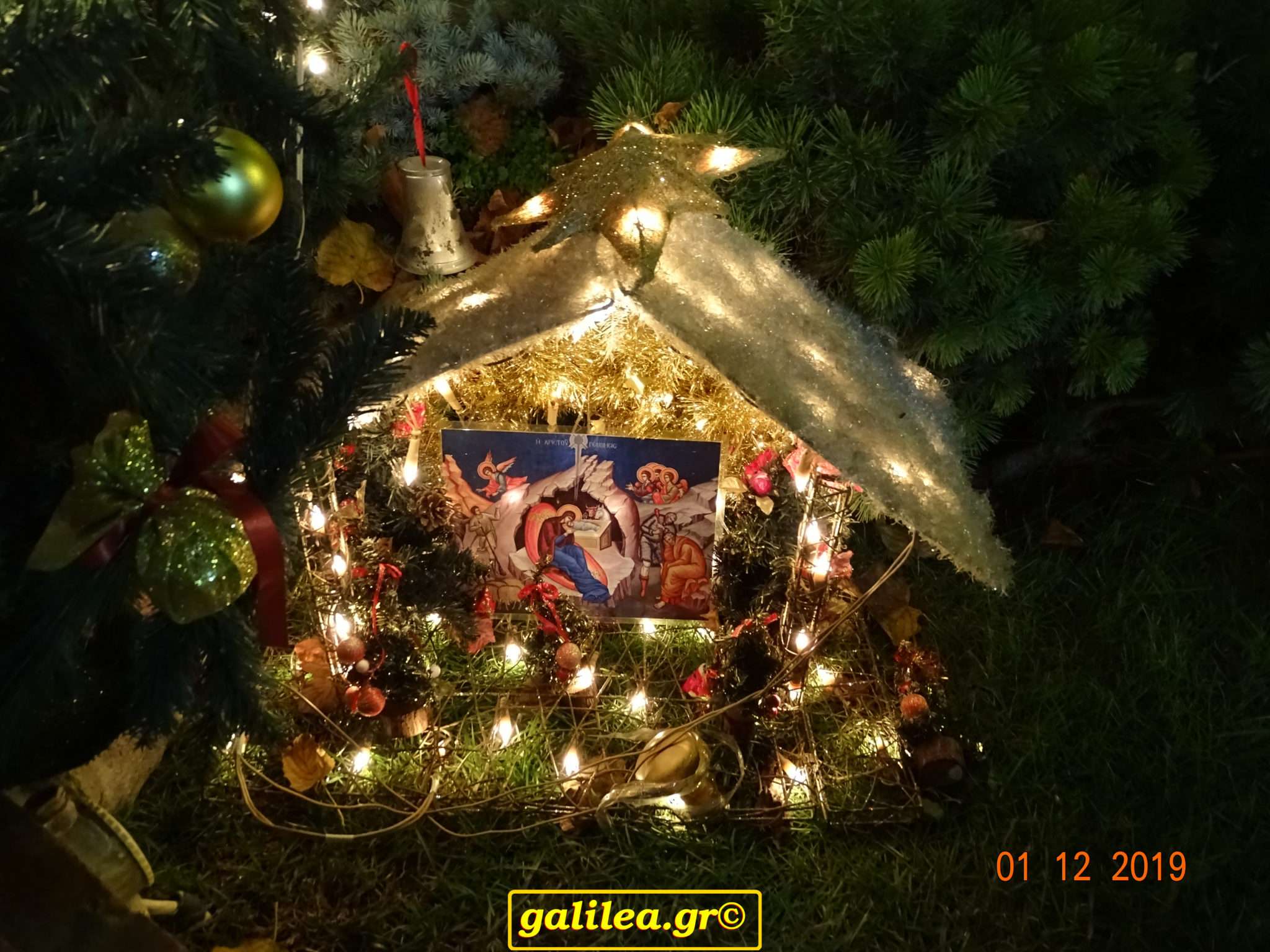
d) The ornaments placed upon the fir tree also hold their own symbolism. They represent the gifts and graces of God, which He scatters among mankind. Chiefly, the fruit of the tree is “the Body and Blood of the Lord”, which is now offered to us that we may live. Furthermore, the manger which we place at the base of the tree symbolises the new Paradise, the Theotokos, within whom the new tree, Jesus Christ, was born and sprang forth! This plant always exists, even within every church, in the form of the chandelier!
“SAINT BASIL”
When on New Year’s Eve we go from neighbourhood to neighbourhood singing the carols, what do we say? “Saint Basil comes from Caesarea..” He does not come from England, he does not come from Finland. This Saint Basil is Saint Basil the Great. Of course, the fact that he is called “Ayi-Vasilis” is not strange. Thus the people say, and likewise “Ayi-Lias”, “Ayi-Nikola”, “Ayi-Giorgis”... Saint Basil the Great, therefore, “Ayi-Vasilis”, who hailed from Caesarea in Cappadocia, was tall, slender and dark-complexioned, and died at a young age, 49 years old. Yet what made him a short, stout old man? Saint Basil of the 4th century AD was indeed a man of letters, of knowledge, of education and of the ascetic spirit, but he was also profoundly philanthropic. He built a vast city with a hospital, a home for the elderly, an orphanage, a leprosarium and a poorhouse—the well-known Basiliada. There he gathered all the poor and helpless people to care for them and provide them with all they needed... together with the blessing of God.
The “Basiliada”, which through the ages has stood as a model of humanitarian work and social service, is the creation of his most sweet heart and his selfless love, which “compelled” him to go so far as to care for the lepers, indeed to attend to them personally himself. And most strangely, to kiss their sores with the same reverence with which he kissed the icon of Christ and of the Saints... In this way, the philanthropic Saint Basil created a spiritual family; he lived among the people, and the people loved him and always felt him near.
Yet when this philanthropic saint fell asleep in the Lord, people could not forget him, saying: “Where is this holy man who used to come to the houses of the poor with a small bundle in his hands, or to the houses of the wealthy with a good blessing on his lips?”!
Thus, even after his repose, on the day of his feast, they remembered him all the more vividly; and to make his presence alive among them, they ran from door to door, imitating Saint Basil the Great in his blessings and his acts of charity. And just as he did in those days, so too the faithful, after his repose, distributed gifts and blessings to all, rich and poor alike. Indeed, some went in disguise so as not to be recognised, saying that Saint Basil was bringing these gifts or offering these blessings, and they repeated the very blessings that Saint Basil the Great used to give while he lived, so that people might remember what the Saint offered to humanity in those times.
Some, being more wise and philosophical, would climb onto the roofs of the houses and, from the chimney, lower a rope with a small bell at its end; when it reached the fireplace, they would ring it and proclaim the blessings of Saint Basil the Great, so that it would appear as though they were descending from heaven and were spoken by Saint Basil himself!
Gradually, this most precious and philanthropic spirit of Saint Basil the Great, the spirit of almsgiving, was embodied and given the form of a man clad in the purple garment of emperors, of short and stout stature, which is an expression of creative abundance (we employ exactly the same mode of symbolism for the person of the Most Holy Theotokos in the well-known text of the Salutations, where the hymnographer writes “Rejoice, rich and fertile mountain in the Spirit” (Fourth Ode of the Canon of the Akathist Hymn)), and with the face of an Elder, which is an expression of wisdom and long experience. Thus the Orthodox Christians of Cappadocia personified in “Ayi-Vasilis” the wealth of the gifts and charitable graces of Saint Basil the Great, which they would always wish to remember.
Such people can never be forgotten.
“THE VASILOPITA (SAINT BASIL’S CAKE)”
The vasilopita is an occasion, arising from a popular tradition, for material goods to be blessed by a Saint who, during his lifetime, blessed them and gave them generously to the poor (similarly, the fanouropita offered to Saint Phanourios and other customs serve a corresponding purpose). However, the devotion of the people surrounded the custom with greater splendour.
Thus, once 1 January was established as New Year’s Day, people wished, in a festive atmosphere, to ask God to extend His blessings to all their possessions, reminding themselves that material goods are useful but are not everything in life. This is what the cutting of the vasilopita symbolises. Namely:
A) The cake is a symbol of the good things of life offered to us.
B) Furthermore, the one portion containing the coin is the choice portion, and it reminds us of the Lord’s words to Martha: “Mary has chosen the good portion” (Luke 10:41). That is to say, material goods are good and necessary in our lives, but the “choice portion” containing the coin, that is, the Body, the Blood and the blessing of Christ, is the highest good!
Thus, on the feast of Saint Basil the Great, which coincides with New Year’s Day, Orthodox Christians found an opportunity to remind us that in the new year we should not live by placing material goods first, but spiritual goods.