UPRIGHT CONDUCT — When a prayer comes from our heart — Fr Nikiforos.
6 Φεβρουαρίου 2020 · ΧΡΗΣΤΟΗΘΕΙΑ
Βίντεο
CHURCH OF SAINT GEORGE THE GREAT MARTYR, LARISSA
2020 6 Feb. UPRIGHT CONDUCT — When a prayer comes from our heart.
A talk by Archimandrite Nikiforos Kontogiannis on “UPRIGHT CONDUCT,” guided by Saint Paisios the Athonite's book “With Pain and Love for Contemporary Man,” p. 110 ff., and Saint Nikodemos the Athonite's “Upright Conduct” (Discourse 5: The soul must be adorned, p. 81).
The talks take place at the Church of Saint George the Great Martyr in Larissa every Thursday at a quarter to seven in the evening, immediately after the Service of Supplication, and are also broadcast live on our website: galilea.gr/new/webtv/live/.
On Thursday 6 February 2020, the evening talk by our spiritual father, Fr Nikiforos Kontogiannis, entitled “CHRISTIAN CONDUCT,” took place at our Church of Saint George the Great Martyr in Larissa. Drawing on Saint Paisios the Athonite's book “With Pain and Love for Contemporary Man,” it explores various conclusions concerning spiritual life, living and working together, and approaching God generally, with the aim of salvation, sanctification, imitation of Jesus Christ and, ultimately, the human person's theosis through the incarnate Jesus Christ. The talks take place every Thursday at 6:45 p.m., immediately after the Service of Supplication, which begins at 6:00 p.m. They are also broadcast live through our website: galilea.gr/new/webtv/live/ .
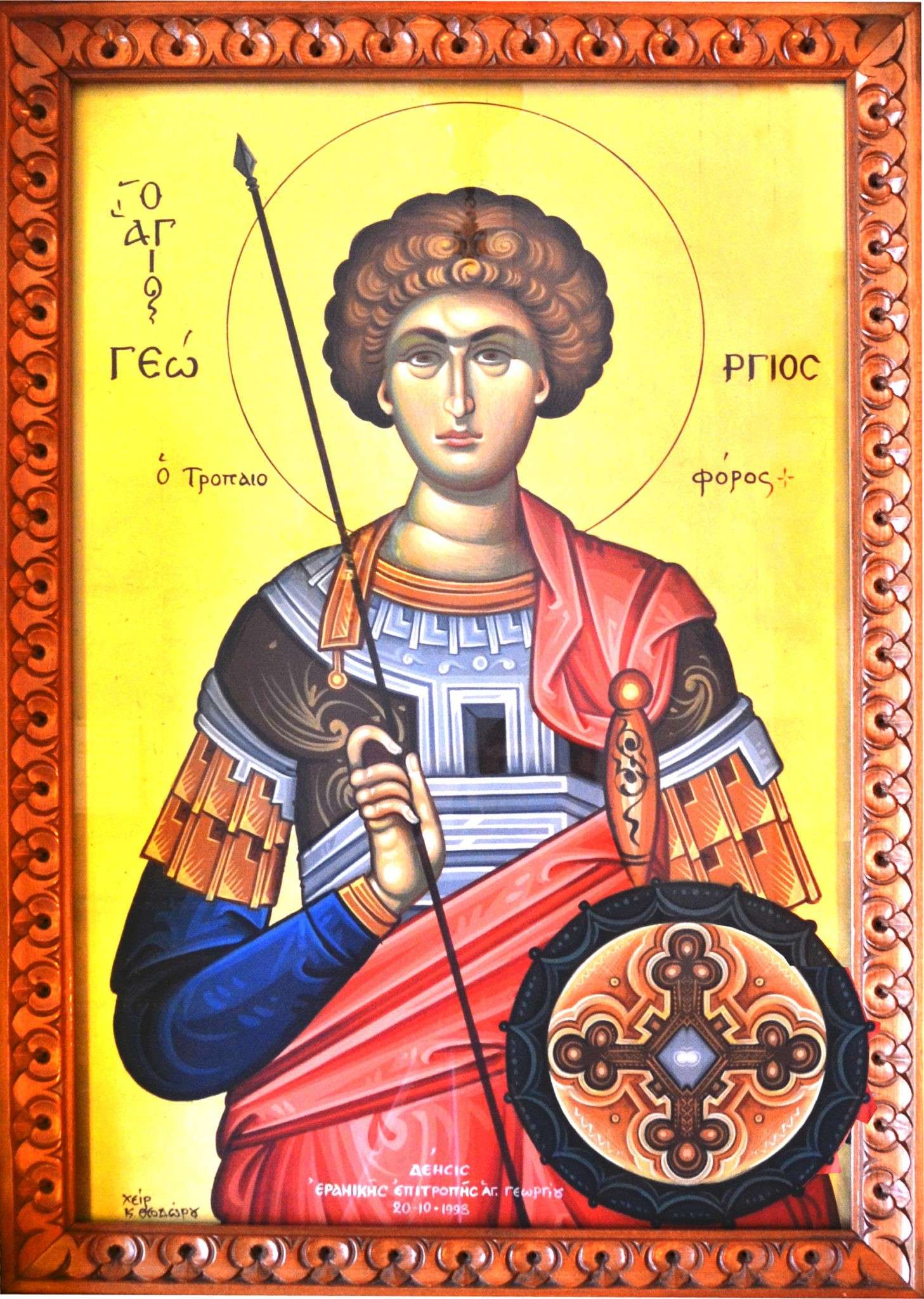
The Service of Supplication was offered in honour of Saint George the Great Martyr and Trophy-bearer. During it, the holy relics of Saint Luke the Physician and Saint Nektarios, Bishop of Pentapolis, were displayed for the faithful's veneration and blessing, together with two handcrafted objects made by Saint Paisios the Athonite containing wood from the Precious Cross.
APOLYTIKION. Tone 4. As liberator of captives, defender of the poor, physician of the sick and champion of kings, O Trophy-bearing Great Martyr George, intercede with Christ our God that our souls may be saved.
THEME OF THE 13TH TALK:
“ When a prayer comes from our heart “
Guided by Saint Paisios the Athonite’s book With Pain and Love for Contemporary Man, page 110 onwards, and Saint Nikodimos the Athonite’s Christian Conduct, Discourse V, “That the soul must be adorned”, p. 81.
Saint Paisios, Spiritual Counsels, Volume 1
With Pain and Love for Contemporary Man, p. 110 onwards.
The prayer that comes from the heart is a divine prayer.
Now let me give you a… “curse” too! May God flood your hearts with His goodness and His abundant love until you are beside yourselves, so that your minds may leave the earth and be near Him in heaven even now. May you go mad with the divine madness of God's love! May God set your hearts ablaze with His love! Do not make me give you a second one another time, because my “curse”—the good kind—takes effect, since it comes from my heart. I felt sorry for you when I was in the sanatorium[1] too. Some of you had been waiting eight years. “We shall establish a monastery,” you said, but the monastery never came into being. You had grown despondent. Then I said, “As soon as I leave hospital, the monastery will spring up like a mushroom. Within a year you will be in the monastery!” And indeed, within a year the monastery was built! I said it there from my heart. You had a good disposition, and that is why God did not abandon you. There is no other explanation!
When you feel compassion for a person who has humility and asks you from the heart to pray, for example, about a passion that torments him, and you tell him, “Do not be afraid; you will become better,” you offer him a prayer that is divine. It contains much love and heartfelt pain, and that is why it takes effect. It is pleasing to God, and God fulfils the prayer. In other words, simply feeling another person’s pain is itself like a prayer.
[1]. In 1966
Saint Nikodemos the Athonite, “Christian Conduct.”
(Discourse 5: The soul must be adorned, page 81.)
When we adorn the soul, all our prayers become godly. They have blessing and are heard by God. Saint Nikodemos the Athonite says: you adorn and beautify yourselves and think you adorn the true human being, but this is foolish. This is our very inexpensive self. Our worth is not in what appears. Basil the Great says, ‘No, the human being is not what is seen, but the invisible soul and the inward spiritual person.’ For the soul gives life to, nourishes and moves the body, enabling it to feel, while the body without the soul is dead, motionless and insensible. Thus, when you adorn the body, it is as though you adorned a motionless statue, insensible, blind and deaf. Redirect your desire to adorn your body, the outward, false person, and begin cultivating the soul and adorning it with virtues. For it is very foolish to care for the mortal body, present today and gone tomorrow, while disregarding the immortal soul. Saint John Chrysostom says, ‘Why do you adorn the body while the soul is neglected and held by uncleanness?… Turn this adornment inward, and place these necklaces around the soul’ (Homily Sixty-nine on the Gospel according to John).
But how do we adorn our soul? If we put into practice in our lives the Apostle Paul's counsel (Rom. 12:6–21), then we shall truly make our soul beautiful; our prayers will spring from our humility and love, and all our prayers will then truly be inspired by God and heard by Him. The Apostle Paul therefore advises: "6 We have different gifts, according to the grace granted to us: whether the gift of prophecy, in proportion to each person's faith; 7 or the gift of service, to meet the needs of service; or the gift of teaching, to meet the needs of instruction; 8 or the gift of consoling, to offer comfort to whoever needs it. Let the person who communicates God's Word do so intelligibly. Let the person in charge carry out his work with scrupulous diligence. Let whoever shows mercy do so joyfully. 9 Let your love be sincere. Abhor evil and remain firmly attached to what is good. 10 Cultivate brotherly love among yourselves, showing affection to one another. Esteem one another, each striving to be the first to show it to the other. 11 Do not grow weary of diligence. Let your spirit always be ready for action. Work for the Lord. 12 Rejoice in the hope you have. Show patience in affliction. Persevere in prayer. 13 Help other believers in their needs. Seek opportunities for hospitality. 14 Pray for the good of those who persecute you. Wish them well and do not curse them. 15 Share the joy of those who rejoice and the mourning of those who mourn. 16 Show no partiality among yourselves. Do not be aloof, but be drawn by the example of the humble. Do not consider yourselves wise. 17 Repay no one for the evil he has done you by doing evil to him in return. Always be ready to behave well towards everyone. 18 As far as it depends on you, live peaceably with all people. 19 Do not take revenge yourselves, beloved, but restrain your anger, for in Scripture we read, 'Vengeance belongs to Me; I shall repay, says the Lord.' 20 Therefore, if your enemy is hungry, give him food. If he is thirsty, give him a drink. By doing this, you are as though setting his conscience on fire. 21 Do not be overcome by evil, but overcome evil with goodness as your weapon." [Top]