61ST EVENING TALK: “UPRIGHT CONDUCT (PART III) — FAMILY LIFE”
25 Νοεμβρίου 2021 · ΧΡΗΣΤΟΗΘΕΙΑ
Βίντεο
At our Church of Saint George the Great Martyr in Larissa, on Thursday 25 November 2021, the evening talk of the third series by our spiritual father, Fr Nikiforos Kontogiannis, entitled “CHRISTIAN CONDUCT (Part Three) – FAMILY LIFE”, took place. Drawing on Saint Paisios the Athonite's book “Family Life”, it explores various conclusions concerning spiritual life, living and working together, and approaching God generally, with the aim of salvation, sanctification, imitation of Jesus Christ and, ultimately, the human person's theosis through the incarnate Jesus Christ. The talks take place every Thursday at 7:00 p.m., immediately after Vespers and the Service of Supplication, which begin at 6:00 p.m., and are also broadcast live through our website: galilea.gr/new/webtv/live/.
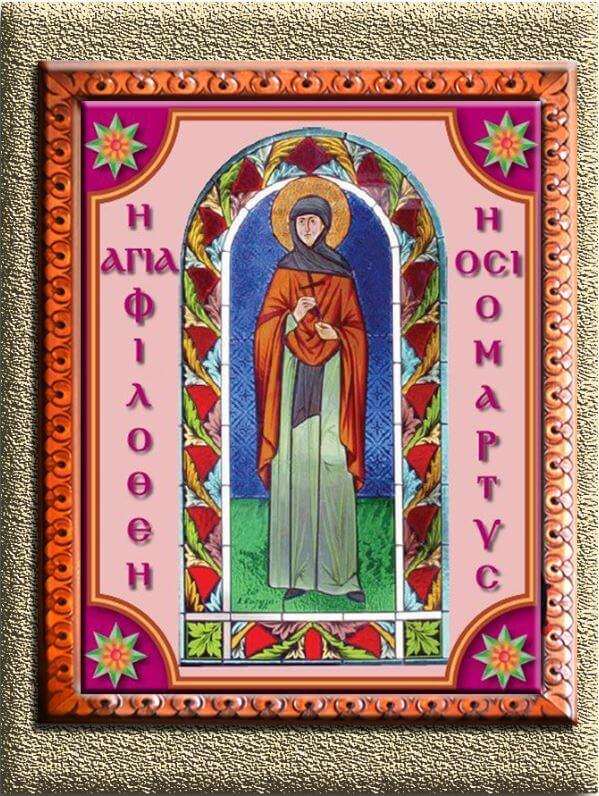
The Service of Supplication (Paraklesis) was celebrated in honour of Saint Philothei of Athens. During it, the holy relics of Saint Luke the Physician and Saint Nektarios, Bishop of Pentapolis, were set out for the faithful’s veneration and blessing, as were two handmade works by Saint Paisios the Athonite containing wood of the Precious Cross.
APOLYTIKION. Tone 4. To the melody “Come Quickly.” Having received the radiance of the venerable Saints, O holy one, you brightened the city of Athens with your ascetic life and grace. For, shining in good deeds, O Mother, you struggled devoutly out of love for your neighbour. Therefore Christ has glorified you, O Philothei.
TOPIC OF THE 61ST TALK:
“Before we set out on the path of our life”
Excerpts from a book by Saint John Chrysostom, Volume 21, E.P.E., HOMILY 16, Ephesians 4:31–32, page 103.
“Let every bitterness, anger, wrath, furious shouting and insult against your neighbour be put away from you, together with all malice. Be kind to one another, compassionate, forgiving one another, just as God forgave you!”
1. To attain the Kingdom of Heaven, it is not enough to rid ourselves of wickedness; we must also practise the virtues abundantly. To escape fiery Gehenna, we must refrain from wickedness; but to attain the Kingdom of Heaven, we must devote ourselves to practising virtue. Do you not know that this also happens in the courts of the Gentiles when deeds are examined and the whole city meets in assembly? Among the pagans too it was an ancient custom to crown with a golden wreath the person who had performed great benefactions, not the person who had merely done the city no harm. The latter was sufficient only to avoid punishment. Thus you too should be led towards this honour. But I do not know how something escaped my attention a little, especially since it was necessary to tell you. I devote the first part of this discourse to this distinction, using it as a small correction. For although I said that eliminating evils suffices to keep us from falling into Gehenna, during my discourse a terrible threat came to mind: it imposes punishment not on those who do evil, but on those who have omitted to do good… EPE 21,103